
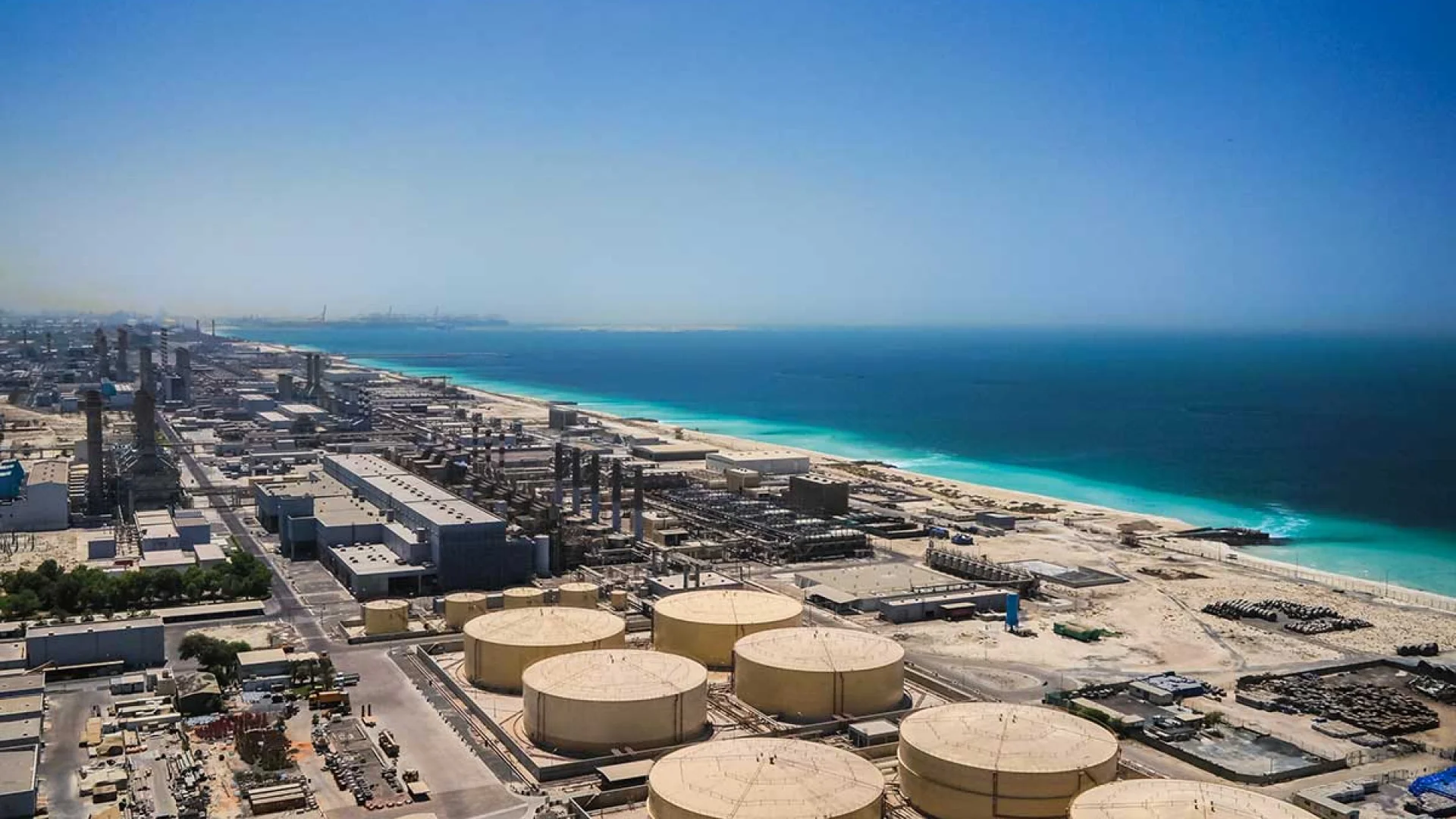

Before the coastline heats up, a new industrial heartbeat is already turning seawater into drinking water. The UAE has inaugurated a desalination station reported to produce up to 60 million gallons per day—capacity designed for a nation where demand is steady, growth is fast, and rainfall is never a plan. Beyond the engineering, it’s a strategic buffer: steadier supply, greater resilience, and infrastructure that keeps pace with expanding cities. In a region built on certainty, this is what certainty looks like—manufactured, measured, and delivered.
The first thing you notice is the sound. A low, constant hum—like an ocean you can’t see—rolling through steel corridors and sealed doors. Outside, the sea glitters. Inside, it gets rewritten.
According to the report, the UAE has launched a new desalination station capable of producing up to 60 million gallons of water per day. It’s an enormous number, but the impact is intimate: taps that don’t falter during peak hours, communities that can grow without holding their breath, and an extra layer of security in a climate that rarely offers mercy.
In the control room, screens pulse with pressure lines and flow rates. A technician points at a chart, then back at the pipes. “Stable,” he says—one small word that carries a lot of weight here. Desalination in the UAE isn’t a backup plan; it’s the backbone. The country has learned to treat water like a vital product: engineered, scaled, and safeguarded.
There’s something almost poetic in the process—salt pushed aside, clarity pulled forward—yet it’s also deeply practical. This is what infrastructure looks like when it’s built for the long game: reliability today, capacity for tomorrow.
Water capacity is a quiet but decisive growth enabler—especially for large-scale communities and industrial zones.